If you are trying to figure out how to get rid of razor burn, start by doing less, not more. I learned that after shaving before an early work meeting, splashing cold water on my face, and then applying a strongly scented aftershave that felt like rubbing barbecue sauce into a paper cut. My neck stayed red all morning. Real talk, from the sink: razor burn is usually irritated skin, not a problem you fix by scrubbing harder.
Razor burn often shows up as redness, stinging, tightness, or small irritated bumps shortly after shaving. It can happen when the blade drags across dry skin, when you press too hard, or when you shave against the direction your hair grows. The good news is that most mild cases settle when you remove the things causing the irritation.
The first 24 hours: stop irritating your skin
The fastest answer to how to get rid of razor burn is to give your face a quiet day. Do not shave over the irritated area again. Do not use a face scrub, exfoliating brush, acne treatment, alcohol-heavy aftershave, or heavily fragranced lotion. Those products might have a place in someone else's routine, but this is not the moment to test them.
Rinse the area with lukewarm water and a gentle cleanser. I like Vanicream Gentle Facial Cleanser because it leaves less residue and costs roughly $9 to $12, depending on the store. CeraVe Hydrating Facial Cleanser is another reasonable option. Use your fingertips, not a washcloth, and pat your skin dry with a clean towel.
A cool, damp washcloth can calm the hot feeling for five to ten minutes. After that, apply a plain, fragrance-free moisturizer. CeraVe Daily Moisturizing Lotion, Vanicream Daily Facial Moisturizer, and La Roche-Posay Toleriane Double Repair are all practical choices. You do not need a fancy post-shave balm with a name that sounds like it belongs in a hotel bathroom.

What actually helps razor burn heal
When I was learning how to get rid of razor burn, I made the classic mistake of shopping for the strongest product on the shelf. Strong is not the same as useful. A basic moisturizer helps support the skin barrier, which is the outer layer that keeps moisture in and irritants out. If your face feels tight after shaving, that barrier needs boring support, not another aggressive ingredient.
Look for labels that say fragrance-free and suitable for sensitive skin. Ingredients such as glycerin, ceramides, petrolatum, and hyaluronic acid can help reduce dryness. You do not need all four. A $10 moisturizer used consistently usually beats a $40 product that sits unopened in a cabinet.
A small amount of plain petroleum jelly can protect a very dry patch, but use only a thin layer because it can feel greasy. Avoid putting random household products on your face. Toothpaste, rubbing alcohol, lemon juice, and baking soda are not clever razor-burn treatments. I wasted enough money on questionable fixes to know that the cheap, simple route is better.
If you have pus-filled bumps, spreading redness, severe pain, warmth, fever, or irritation that keeps returning, get medical advice. Persistent bumps can be ingrown hairs or folliculitis rather than simple razor burn, and a clinician can tell the difference.
Fix the shave, not just the aftermath
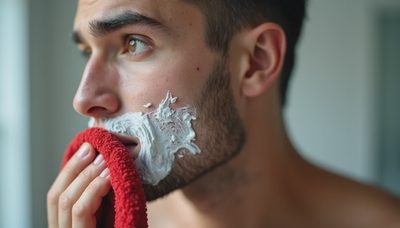
The next part of how to get rid of razor burn is changing the shave itself. Start with warm water for a few minutes, preferably near the end of a shower. This softens facial hair and makes the blade work with less tugging. Apply a plain shaving cream or gel and let it sit for about a minute before moving the razor.
Use a clean, sharp blade. A dull cartridge pulls hair instead of cutting it cleanly, so people naturally press harder. That extra pressure is a fast route to irritation. You do not need the most expensive handle; a decent Gillette SkinGuard, Schick Hydro Sensitive, or another sensitive-skin cartridge can work if you use a light touch. Replace the cartridge when it starts dragging rather than following a heroic calendar schedule.
Shave with the grain first. On the cheeks, that usually means downward, but the neck can grow in several directions. Run a fingertip over the stubble to learn its pattern. Use short strokes, rinse the blade often, and avoid passing over the same spot repeatedly. If you need a closer result, apply more shave cream and make one careful second pass instead of scraping dry skin.
A simple routine for the morning after
Here is my five-minute plan for how to get rid of razor burn when I still need to look presentable for work. First, rinse with lukewarm water. Second, wash with a gentle cleanser. Third, hold a cool damp cloth on the irritated areas. Fourth, apply a fragrance-free moisturizer. Fifth, leave the skin alone.
That last step is harder than it sounds. Do not keep touching the bumps to see whether they are improving. Avoid a tight collar rubbing against the neck if possible, and clean anything that contacts your face, including your electric trimmer, pillowcase, and phone screen. If you must trim, use an electric trimmer with a guard and leave a little length rather than taking the blade directly to the skin.
This is also a good time to skip strong actives. Salicylic acid, glycolic acid, retinoids, and benzoyl peroxide can be useful for specific skin concerns, but freshly irritated skin is a poor testing ground. Add one product back at a time after the redness and stinging have settled.

Common mistakes that keep razor burn around
Several habits make the problem last longer. The first is shaving every day over already-red skin because the stubble looks untidy. A day or two of short stubble is usually less noticeable than a bright, irritated neck. The second is using very hot water. Heat can make the skin feel temporarily clean while increasing dryness afterward.
The third mistake is using a scented aftershave because that is what your dad used. I did this for years. The sharp sting felt like proof it was working, but it was mostly proof that my skin was unhappy. The fourth is pressing down on the razor. Let the blade do the cutting.
Another common error is changing five things at once. If you switch razors, cleanser, shave cream, and moisturizer on the same weekend, you will not know what helped. Change one variable, give it several shaves, and write down the result. I run my bathroom experiments like a small purchasing spreadsheet because it saves money and prevents guessing.
When to shave again and what to buy
For mild irritation, wait until the area no longer stings and the redness is clearly improving before shaving there again. That may be a day or several days. When you restart, use fresh shave cream, a clean blade, and fewer passes. If a cartridge repeatedly causes problems, try an electric trimmer or a single-blade safety razor only after learning the technique. A safety razor is not automatically gentler; poor pressure and bad angles can still cause cuts and irritation.
If you are buying a starter kit, spend about $20 to $35 total: a gentle cleanser, a fragrance-free moisturizer, and a sensitive-skin shave cream. That is enough to test the basics without building a bathroom shelf full of products. My practical picks are Vanicream cleanser, CeraVe lotion, and a simple sensitive shave gel. Skip the expensive bundle until you know what your skin tolerates.
So, how to get rid of razor burn? Cool the skin, moisturize it, stop shaving for a short stretch, and fix the pressure, direction, and blade that caused the problem. You do not need a twelve-step grooming identity. You need a clean razor, a light hand, and three products that do their jobs without making a speech. Real talk, from the sink: boring wins this round.




No notes yet — write the first one.